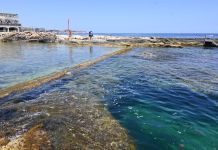
Malta Still Breaching EU Sewage Rules, European Parliament Hears
Malta continues to breach European Union rules on sewage treatment despite a Court of Justice ruling last October, the European Parliament heard this week. Seawater readings confirmed that the island nation is still failing to properly treat wastewater before it's discharged into the sea, according to a European Commission representative responding to a petition brought by environmental group Flimkien għal Ambjent Aħjar (FAA) [1].
The CJEU judgment found that Malta had failed to fulfil its obligations to properly manage urban wastewater and monitor discharges. Yet the ruling has done little to improve the situation on the ground. Last summer alone, nine Maltese beaches faced closures due to sewage contamination [1].
A Infrastructure Problem, Not a Paper One
FAA member Benjamin Mifsud Scicluna addressed the European Parliament's Petitions Committee (PETI), describing the core issue in stark terms: Malta has simply exceeded its carrying capacity, and the infrastructure can no longer cope with the pressure [1].
"It is unacceptable for sewage overflows to continue taking place, and Malta's seas deserve proper protection: not just on paper," Mifsud Scicluna told the committee [1].
The activist emphasised that clean seas are not merely an environmental concern—they're fundamental to Maltese identity, culture, and the economy. The petition calls on both the European Parliament and Commission to investigate what measures Malta has taken to comply with EU obligations, and to consider further action to enforce the court judgment as a matter of urgency [1].
EU Must Deliver on Its Promises
Nationalist Party MEP Peter Agius, a full member of PETI, echoed the concerns, noting that sewage discharges continue to affect many Maltese citizens. He reminded the committee that when Malta joined the EU in 2004, the nation had hoped it would bring high environmental standards [1].
"We speak a lot about laws, but they are not worth anything if they do not translate into rights," Agius said, stressing that the Commission must act to address a situation that has remained unchanged [1].
Agius warned that without swift action, the European Union risks being perceived as having no real power to enforce its own rules—a damaging prospect for the institution's credibility across its member states [1].
The petition's acceptance for debate by the European Parliament signals growing pressure on Malta's government and Brussels to tackle what should be a straightforward environmental health issue: ensuring that swimmers and the broader marine ecosystem aren't exposed to sewage contamination [1].