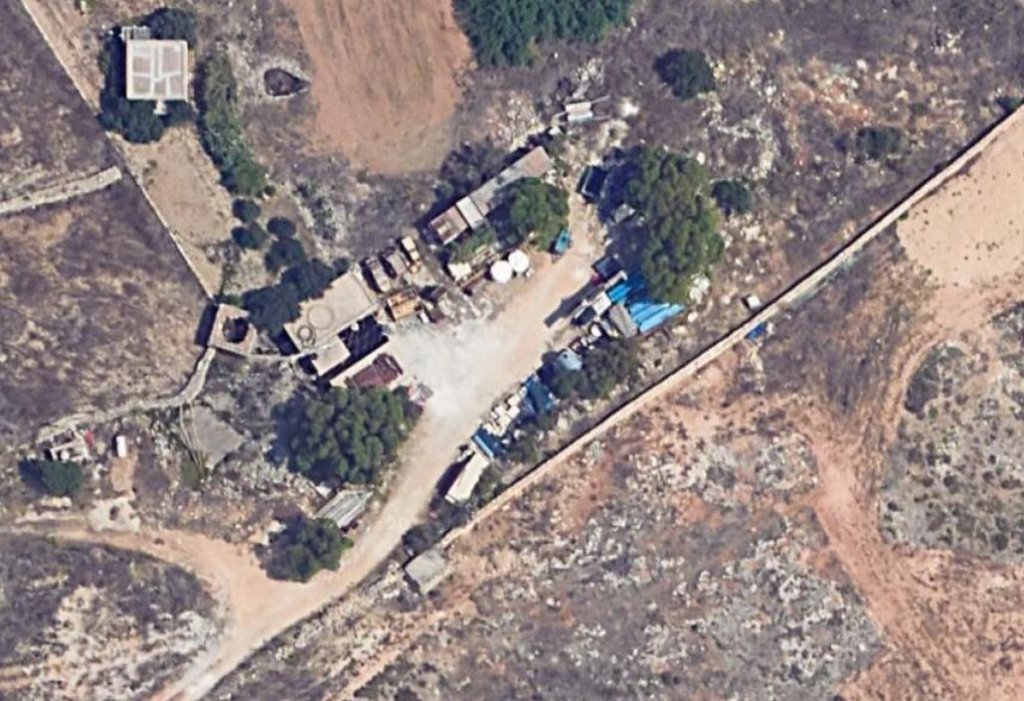
Protected Landscape Destroyed for Equipment Storage
The Planning Authority has opened an enforcement case against Terracore Ltd over extensive illegal interventions at a site near the Dingli Cliffs, where protected garigue land has been converted into commercial storage facilities [1]. The enforcement notice, opened this month under case number EC/28/26, reveals a pattern of illegal activity stretching back decades on what is classified as scheduled, protected land [1].
The site sits within an Area of High Landscape Value, a designation that has protected Malta's coastal cliffs and their surroundings since a 1996 government notice added them to the list of scheduled properties [1]. Despite this protection, the drilling company has systematically transformed the natural landscape into what amounts to an industrial storage yard.
Years of Illegal Interventions
According to the enforcement notice, the illegalities include a change of use from karst land to storage facility, the construction of two unauthorised garages and storage units, the formation of a passageway through deposited inert material, and the ongoing storage of containers, scrap, metal objects, pipes, construction materials, drilling bits, heavy machinery, concrete blocks, water tanks, and skips [1]. The company has also parked large commercial vehicles on the site [1].
While the full extent of illegal activity at the site remains unclear, records suggest the interventions date back at least to the 1990s, with further work carried out over the years [1]. It is not immediately clear whether Terracore is responsible for all of these earlier interventions [1].
Controversial Sanctioning Application
Terracore applied in July to have its illegal interventions sanctioned, a move that raised eyebrows partly because the company engaged former environment and planning minister George Pullicino to handle the application [1]. The timing is particularly noteworthy—the Planning Authority could potentially have opened the enforcement case when Pullicino held ministerial responsibility for planning matters [1].
The company's application (PA/5589/25) also proposes constructing a 1-meter boundary wall and a gate, along with planting "a good number of mature trees to increase screening," including olive trees, in what appears to be an effort to mitigate the visual impact of the illegal works [1]. The application attracted no objections from environmental NGOs or the public during the statutory consultation period [1].
Cultural Heritage Authority Demands Restoration
The Superintendence of Cultural Heritage has rejected the company's olive-branch approach, insisting that the site should be rehabilitated back to its original state [1]. In their response, the SCH emphasized that "Terracore's interventions have resulted in a negative impact and the degradation of both the site and its surrounding landscape" [1].
The Agricultural Advisory Committee also objected to the proposals, emphasising that it opposed any development outside designated zones that was not for agricultural purposes and did not align with rural planning policies [1].
Assessment Still Pending
A key piece of the puzzle remains outstanding: the Environment and Resources Authority has not yet submitted its assessment. Last October, the authority indicated it required additional time to conduct a complete evaluation—an assessment that is still pending [1]. This delay means the enforcement case remains in limbo, despite the clear evidence of illegal activity.
The Planning Authority's track record on following up enforcement cases suggests the company could continue enjoying its illegal interventions for years to come, irrespective of the outcome of its application [1].
For residents concerned about the protection of Malta's natural heritage and coastal landscapes, the case highlights ongoing tensions between enforcement and compliance—and raises questions about how effectively the planning system can protect even the most formally designated sites from commercial pressure.