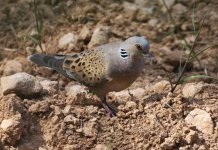
BirdLife Accuses Hunters of 'Amateur Deception' Over Turtle-Dove Data
BirdLife Malta has hit back sharply at hunting organisation Kaċċaturi San Ubertu (KSU), accusing them of "amateur" deception and a "basic failure to understand" European migration data in the ongoing row over turtle-dove hunting policy [1].
The dispute centres on conflicting interpretations of recent population figures. KSU had pointed to BirdLife Europe & Central Asia's 2024 Annual Review, which reported that turtle-dove populations had reached their "highest recorded level in 2024, with a 40.5% increase and approximately 615,000 additional breeding pairs" [1]. The hunters' group argued this directly contradicted BirdLife Malta's claim of an "alarming continued decline" [1].
But BirdLife Malta says the hunters are fundamentally misreading the data. The key issue, they explain, is the difference between Europe's two migration flyways. KSU's figures apply only to the Western flyway – covering Western European countries like Spain, Portugal and France – where a four-year full moratorium on hunting has been imposed [1].
Malta, however, sits on the Central-Eastern flyway, which tells a very different story. New EU data covering 2019-2024 shows that turtle-dove populations along this route "continued to decline," according to BirdLife Malta [1]. "This clearly demonstrates that autumn hunting has a significant negative impact," the environmental group said, adding that spring hunting was "even more damaging" [1].
"Spring hunting has an expiry date. That time is now." – BirdLife Malta, reiterating calls for a moratorium [1]
BirdLife Malta has renewed its call for a minimum six-year moratorium on turtle-dove hunting until the next EU data is published in 2032 [1].
Broader Concerns Over Enforcement
The dispute comes amid wider concerns about illegal hunting practices on the island. BirdLife has pointed to three recent incidents as evidence of ongoing breaches: the brutal killing of a Common Kestrel in Gozo, another Kestrel left blinded and injured at Mqabba on 20 March, and a Grey Heron found with its beak destroyed near Delimara on Friday [1].
The environmental group has urged KSU to "focus instead on ongoing illegalities within its own ranks" rather than accusing BirdLife of extremism, as the hunters' organisation had done [1].
Critics have long argued that successive administrations have been reluctant to alienate the hunting lobby, resulting in what environmentalists describe as a culture of lax enforcement and systemic illegality. Despite repeated warnings from the European Commission and numerous reports from civil society groups, the Maltese countryside remains what one observer called "a theatre of defiance where the rule of law often ends at the edge of a trapping site" [1].