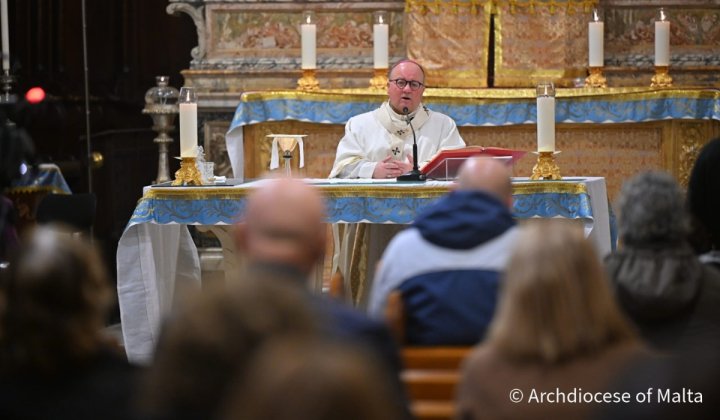
Archbishop Urges Faithful to 'Transform Suffering into Love' on Our Lady of Sorrows
In a deeply moving homily delivered at the Church of Santa Maria di Gesù in Valletta, Archbishop Charles Scicluna reflected on the profound spiritual lesson of the Virgin Mary during celebrations of the Feast of Our Lady of Sorrows. The Archbishop invited the faithful to learn from Mary's example—not to flee from suffering, but to transform it into love [1].
Speaking with the weight of current global events, Archbishop Scicluna prayed for parents across the world who are losing their children to wars and conflict. He also held in his prayers the mothers and fathers grieving children lost to drug overdose and other tragic circumstances [1].
"Together with the tears of this woman beneath the Cross of her Son, we think of the tears of so many mothers and fathers, because love is sometimes transformed into grief and sorrow, but it remains love. Today we bless the grief of those who love, and we pray that this grief may bear fruit: fruit of peace, of solidarity, of harmony among us." [1]
Learning from Mary's Virtues
Drawing on the Gospel of Saint John, the Archbishop reflected on the dying Christ's words to his mother: "Woman, behold your son" and "Behold your mother." Far from being a simple expression of filial care, these words carry a deeper meaning, inviting all the faithful to enter the "school of Mary" and learn from her virtues of humility, obedience, and service [1].
Archbishop Scicluna emphasised humility as chief among Mary's lessons—the humility of a young woman who, upon learning she was to become the Mother of God, responded not with pride but with complete self-surrender: "Behold the handmaid of the Lord; be it done unto me according to thy word" [1].
The Archbishop also highlighted Mary as a woman of service. When she learned from the Angel Gabriel that her elderly kinswoman Elizabeth was expecting a child, Mary set aside her own concerns and hastened to the hill country of Judea, remaining with Elizabeth for three months until the birth of John the Baptist. It was there, at Ein Karem, that Mary proclaimed the Magnificat—a canticle of a servant recognising God's mercy in her lowliness [1].
From Sorrow to Steadfast Faith
The Archbishop traced the arc of Mary's suffering from the Presentation of the Child Jesus in the Temple, when Simeon prophesied that a sword would pierce her soul, through to her steadfast presence beneath the Cross. "She was not ashamed of the condemnation of Jesus," Archbishop Scicluna said. "In her heart, she knew who He was. She knew His mission" [1].
From this contemplation of the Sorrowful Mother, Archbishop Scicluna drew a powerful call to practical charity. He prayed that through Mary's intercession, the faithful would have the grace to respond to those in need and the courage to ensure that the help they offer is genuinely good [1].
"Let us today, on the Feast of Our Lady of Sorrows, enter the school of Mary and learn from her." [1]
The Archbishop reminded the congregation that true care for another cannot involve doing wrong—a call to ensure that charitable actions remain grounded in genuine Christian virtue and compassion [1].